Radium and Polonium
According to Goldsmith, Curie coated one of two metal plates with a thin layer of uranium salts. Then she measured the strength of the rays produced by the uranium using instruments designed by her husband. The instruments detected the faint electrical currents generated when the air between two metal plates was bombarded with uranium rays. She found that uranium compounds also emitted similar rays. In addition, the strength of the rays remained the same, regardless of whether the compounds were in solid or liquid state.
Curie continued to test more uranium compounds. She experimented with a uranium rich ore called Uraninite and found that even with the uranium removed, pitchblende emitted rays that were stronger than those emitted by pure uranium. She suspected that this suggested the presence of an undiscovered element.
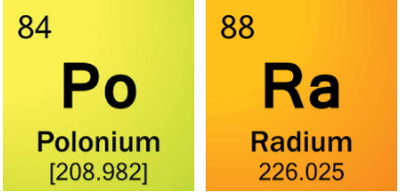
After Curie’s discovery of radioactivity, she continued her research with her husband Pierre. Working with the Uraninite, the pair discovered a new radioactive element in 1898. They named the element polonium, after Curie's birth country of Poland.
They also detected another radioactive material in the Uraninite and called that radium. In 1902, the Curies announced that they had produced a decigram of pure radium, showing its existence as a unique chemical element.
Through observation of radium, made a fundamental discovery, Radiation wasn’t dependent on the organization of atoms at the molecular level; something was happening inside the atom itself. The atom was not, as scientists believed at the time, inert, indivisible, or even solid.
Create Your Own Website With Webador